Case Study 3
Introduction and background
Throughout the last 3 years, I have had the opportunity to deliver the ACP Photoshop and InDesign courses mainly to students from Fashion Business School. These four-day long courses end with an exam scheduled via a software called Certiport that provides official certification for successful candidates. The certification is the only way that validate the students’ knowledge who have to face an exam that lasts 50 minutes and is divided into 2 parts: one related to the theoretical knowledge and the second section linked to the practical area inherent to the use of the software.
Evaluation
As part of one of the self-regulatory needs, as the literature suggests, through direct and constant feedback I perpetually accompany and monitor the knowledge progress of the students by letting them practice exercises similar to those of the final stage (Nicol, D. J., & Macfarlane‐Dick, D., 2006). In this constant sharing of feedback, clarifications, exemplars and focus on the key issues I also avoid demoralising the students and reduce pressure on them by giving them a second opportunity in case of failure.
In doing so, I have noticed that the feedback process was mainly guided unilaterally without any inclusion of the rest of the cohort.
Moving forward
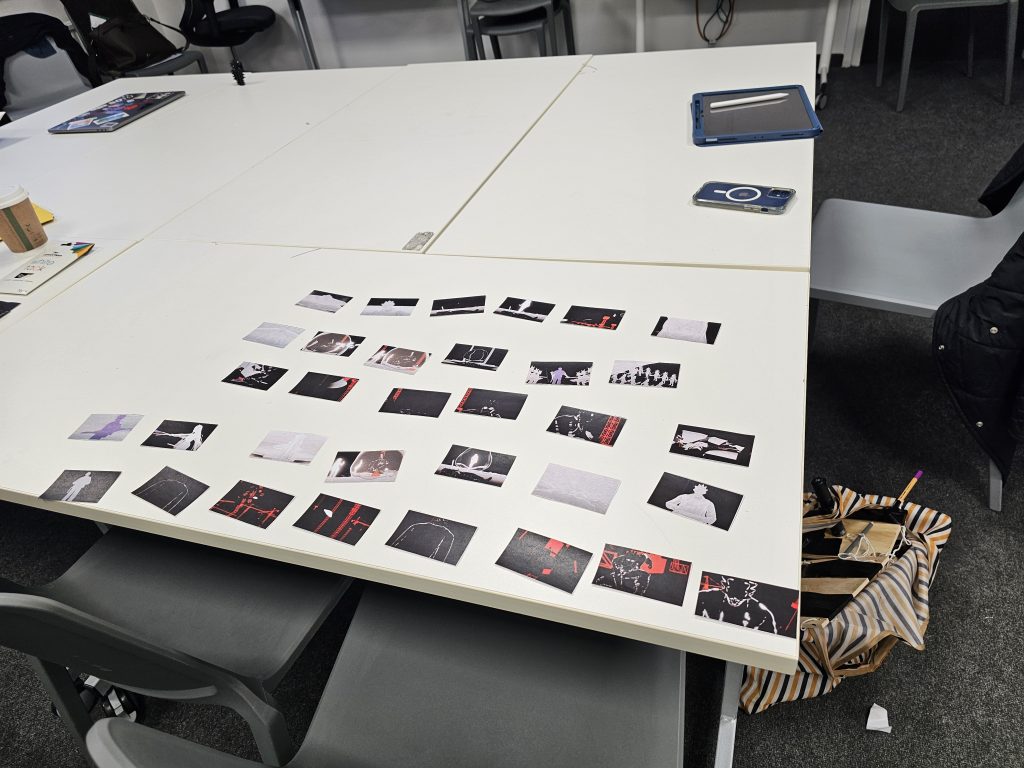
To obviate this lack of ‘democracy” In the feedback process and affected by the last PgCert. workshop focused on Assessment & Feedback I have developed with the BA Fashion Marketing students a collage exercise that consists of cutting images and patterns from unused magazines and recreating a new artefact that is digitalised and altered through Adobe Photoshop after being scanned and/or photographed.
As Professor Kirsten Hardie observes ‘these objects can create powerful and memorable learning experiences enabling students to learn by doing and helping the learners’ critical reflections and their consideration of design studies’.
In doing this, I divided the classroom into groups of 5 students who started collaborating at the very beginning. Facilitated by magazines, scissors, cameras and scanners students found the exercise quite compelling by giving each other suggestions and sharing feedback. After creating a final artifice all of them transferred it into Adobe Photoshop by scanning or taking pictures of it and they individually altered it by applying digital effects, filters and new adjustment layers. As Sarah Ahmed (2019) suggests “what we are trying to achieve for – and more obvious, it was the point of action”.
According to the ‘time-on-task’ principle the more time the students spend on the right task the more they learn. Professor Graham Gibbs (2014) also identifies that “social and collaborative learning leads to much more learning gains making them more active and responsible in their learning roles”.
Findings and Reflections
By introducing this collaborative task, I have noticed how the empathy, verve and energy in the classroom with and among all the students and towards me soared. Students were not only passively dealing with a cold screen, but they were all together having fun by using real and physical tools. Most importantly students were learning from each other by spontaneously and tacitly assessing their works which led to acquiring a new set of transferable skills. As Phil Race observes “students can learn even more about a task comparing their own judgement about it with those of fellow students”.
References
Ahmed, S. (2019). Using Things. In What’s the Use?: On the Uses of Use (pp. 21–67). Duke University Press. https://doi.org/10.2307/j.ctv11hpr0r.5
Calmer. (n.d.). Time-On-Task: A teaching strategy that accelerates learning. [online] Available at: https://www.thisiscalmer.com/blog/time-on-task-learning-strategy.
Gibbs, G. (2015). Maximising Student Learning Gain. In H. Fry, S. Ketteridge, & S. Mar-shall (Eds.), A Handbook for Teaching and Learning in Higher Education (4th ed., pp.193-208). Routledge.
Nicol, D. J., & Macfarlane‐Dick, D. (2006). Formative assessment and self‐regulated learning: a model and seven principles of good feedback practice. Studies in Higher Education, 31(2), 199–218. https://doi.org/10.1080/03075070600572090
Race, P. (2001). A Briefing on Self, Peer & Group Assessment. [online] Available at: https://books.google.co.uk/books?id=rlPCzQEACAAJ [Accessed 7 Mar. 2025].
Record of Observation or Review of Teaching Practice
Session/artefact to be observed/reviewed: Adobe InDesign for BA Year 1 students (Creative Direction of Fashion)
Size of student group: 8
Observer: Victor Guillen
Observee: Giuseppe Renga
Note: This record is solely for exchanging developmental feedback between colleagues. Its reflective aspect informs PgCert and Fellowship assessment, but it is not an official evaluation of teaching and is not intended for other internal or legal applications such as probation or disciplinary action.
Part One
Observee to complete in brief and send to observer prior to the observation or review:
What is the context of this session/artefact within the curriculum?
I teach Adobe InDesign which is a powerful tool that helps student in the composition and construction of portfolios, magazines, zines, books, pamphlet, leaflet and presentations.
How long have you been working with this group and in what capacity?
I have been working with the BA Creative Direction for Fashion Year one since Monday 3th of February 2025.
What are the intended or expected learning outcomes?
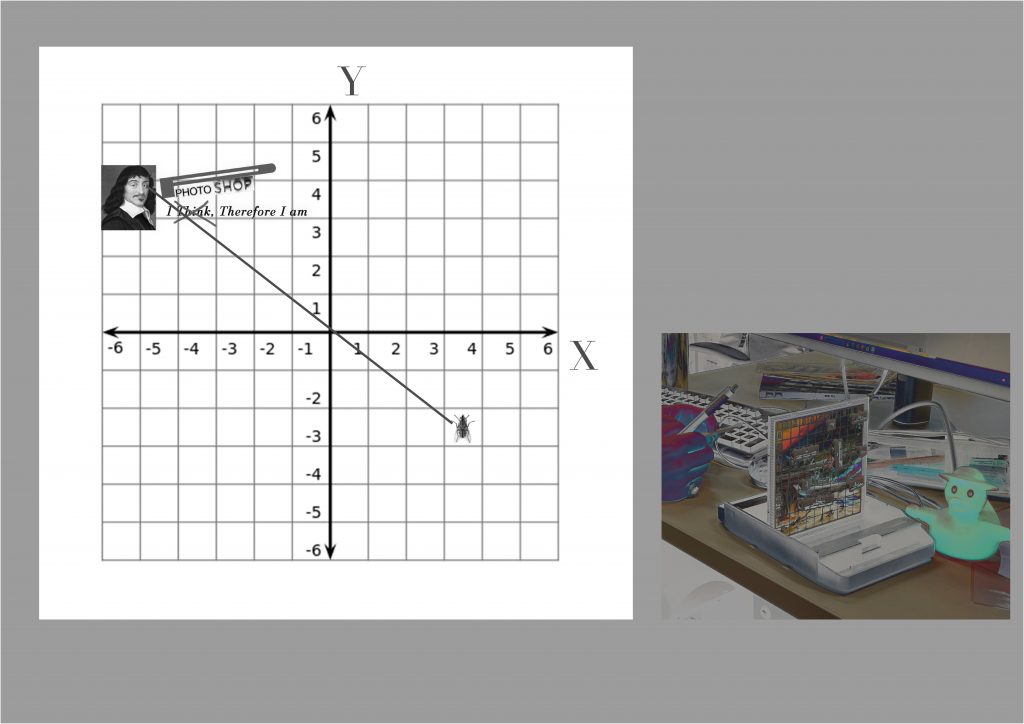
The use of InDesign and in this specific session they will assimilate the use of gradients and of grids and columns on the Cartesian Plane helped by a tactile instrument represented by a battleship board game.
What are the anticipated outputs (anything students will make/do)?
These students will be able to design their own portfolios, zines, leaflets and so on and on.
Are there potential difficulties or specific areas of concern?
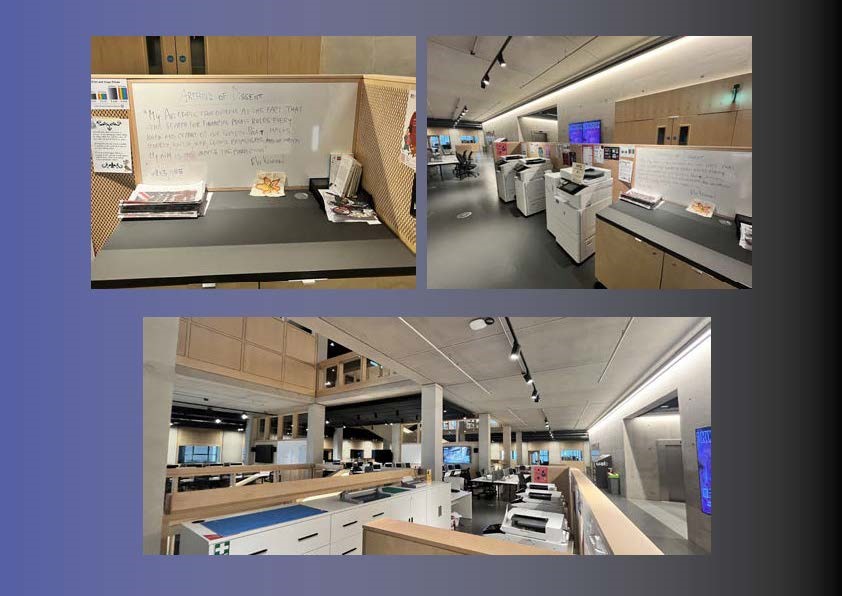
I deem that sometimes the major difficulties are represented by the size of the classrooms and since we have moved into the new LCF house based in Stratford due to the design of the building we have been delivering our teaching sessions right in the middle of Open/Hearth Spaces. Because of this, our teaching environments are constantly affected and altered by external noises, vibrations and a perpetual sense of observation from the surrounding areas.
How will students be informed of the observation/review?
They will informed before the beginning of this section via email and also they will be reminded it before the beginning of the teaching session.
What would you particularly like feedback on?
Ways of interactions with my students, methodologies used to inculcate concepts to the students, gamut of exercises developed.
How will feedback be exchanged?
As a matter of fact, feedback will be useful to start building a new way to teach and deliver pedagogical sessions in a perpetual process of becoming and improvements.
Feedback can be taciturn which means are deduced by the number of attendants, by their frequent interactions with their teacher and with the rest of the classroom, it will be evinced by their facial expressions and body language, by the energy, passion and verve they will throw on the practice during the ACP InDesign course and last but not least by the final results that they will score during their exam sessions.
Part Two
Observer to note down observations, suggestions and questions:
Hi Giuseppe
Thank you again for inviting me to observe your technical-practical InDesign workshop at LCF, part of the BA Creative Direction for Fashion Year One. As areas to focus on, you suggested interaction with students and methods to help students grasp key concepts but you also seemed open to feedback in other areas.
Interaction with students
There is a relaxed yet focused atmosphere with students responding well to your instructions. You demonstrate on screen and then check students’ screens to ensure they follow along, also directing students attention to your screen when needed. You also monitor and check progress at regular intervals, often prompting reflection (e.g. do you know why that’s happened? What do you think?)
I noticed you missed a couple of raised hands when you were busy doing something else (e.g. preparing for the next stage, helping another student), one student then asked verbally but the other didn’t and asked someone else. Maybe in future you may want to make the ‘rules of interaction’ a bit more explicit e.g. no need to raise your hand/call me by name, ask the person next to you, etc, depending on what you think works for you and them.
Introducing key concepts
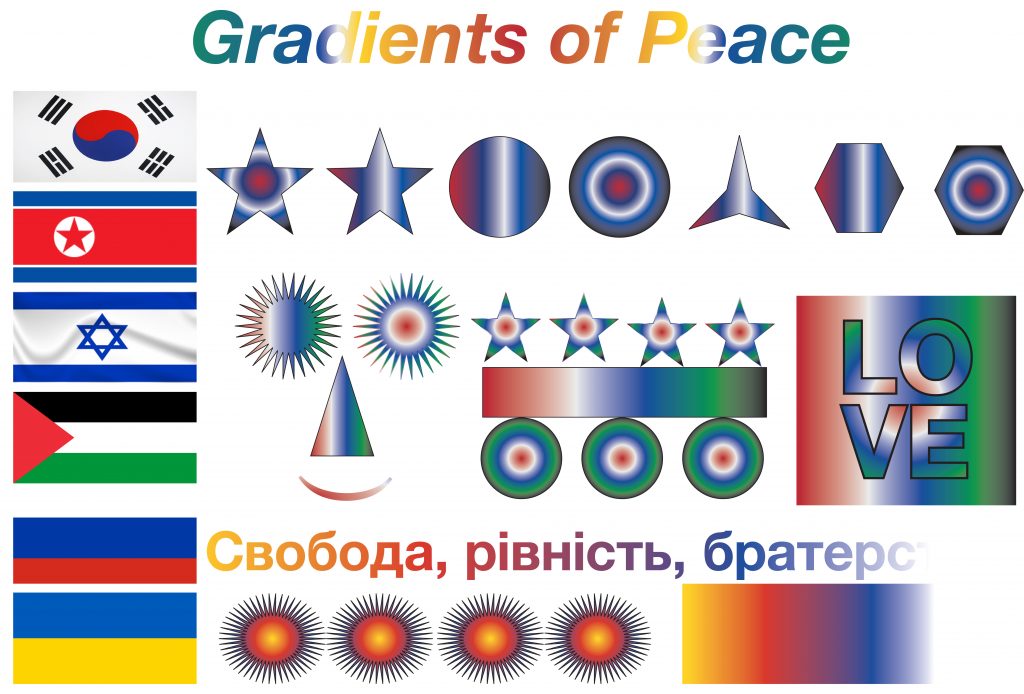
You use a range of techniques here, providing visual input, using objects, telling a relevant anecdote, providing examples and demonstrating (e.g. facing pages, spine, Cartesian plane, 2D vs 3D), often linking these to assessment and/or ‘real world’ applications (e.g. during the exam you will be asked..). You encourage knowledge application through questioning techniques (e.g. how do you make all sides the same?, where do you find…? ). I thought the use of simile/metaphor was very effective (e.g. each of those squares is like a cable car..) as was the link to more familiar objects/concepts (e.g. battleships game). You also aim to provide meaning to the task (e.g. combine different gradients to send a message of peace)
I also noticed that you often use the ‘finish my sentence’ technique to elicit responses by filling in the gaps, which can be very effective. One thing to note is that this technique is heavily dependent on linguistic clues such as intonation, which can be easily missed, so you may want to think of a hand gesture or other visual clue to signpost the technique and help prompt the students.
Other areas:
In terms of how you manage the space, I also liked how you got students to sit in a cluster near you, which helps with monitoring and encourages tutor-student interaction and peer-to-peer interaction, especially when working in open spaces where there may be distracting elements. You also helped student managed the digital space through prompts and tips (e.g. remember to tidy up your workspace to focus on what you’re doing).
I think you managed students not being fully prepared for the session well (e.g. not reading your pre-session email so you had to send files to students a couple of times). It may be a good idea to start the session with a list of things they’ll need and check they’ve got everything ready to avoid further distractions during the session.
A couple of students seem to start a useful conversation between them so I was just wondering if you may want to tap a bit more into peer-to-peer interaction and learning to help you manage conceptual, skills and knowledge differences within the group. A very simple handout with same instructions as on the slide may help students support each other move at a different pace too while you’re busy working with others or preparing for the next stage.
Part Three
Observee to reflect on the observer’s comments and describe how they will act on the feedback exchanged:
Dear Victor,
To begin with I want to say thank you for coming to observe a session of the Adobe Certified Professional I have delivered to the BA Creative Direction for Fashion Year One students at London College of Fashion.
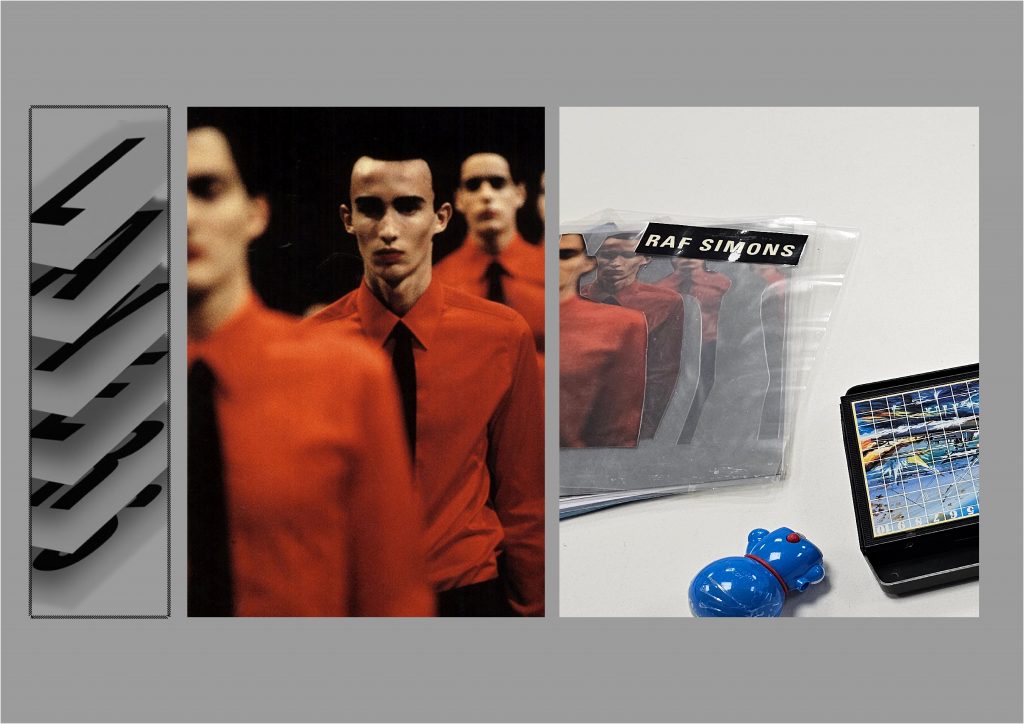
As you have noticed and noted in your feedback, I always do my best to create a relaxing, chilling and at the same time challenging and interactive environment by guiding students through digital slides mixed with haptic exercises. When I teach, I feel quite relieved but at the same time in doing that, I am galvanised and energised by the exchange of ideas with the audience although I should focus more on the interactions among the students by letting them work more time with collages whenever I explain ‘Layers’ and ‘Battleship’ and ‘Strike 4’ when I introduce the Cartesian Plane.
Throughout these sessions, I have also noticed how students could become my best allies by supporting the others who got lost and when for instance I inexorably miss a raised hand. Notwithstanding, I try to recuperate those left behind by reiterating if the task is comprehensive enough. In future, I must reinforce the schedule of my sessions by creating slides where for example a task to accomplish will be clearly explained and shared with the students and by designing a detailed time framework inherent to the session.
Nonetheless, the fact that I deliver this course in an Open Space has drastically affected my students’ concentration who are constantly struggling with noises, vibrations and lack of privacy and intimacy. Moreover, it has been affecting my performance by forcing me to raise my voice and by constantly moving around whilst checking on the students’ outcomes. Overall, these experiences have at least increased my confidence and helped me to map the space by accelerating and decelerating the pace and to keep a certain fit.
My way of engaging with the classroom is based not only on digital presentation or OBL practice but also through a verbal and discursive bridge based on irony and jokes that allows students to fill the crannies and lacunas of an aseptic screen. In addition, I also try to build debates and conversations with my students by referencing fashion designers, movie directors and music artists.
To make sure that all the students are able to follow up with the ACP InDesign tasks and exercises I always share the didactical materials via OneDrive and/or Moodle emailing them at least 48 hours before the commencing of the course. Despite that, on some occasions, students can be affected by a bit of latency and to obviate this issue I make sure that I re-email the students again as a reminder or I share the didactical materials with them by using a USB stick or airdropping them.
2 Record of Observation or Review of Teaching Practice
Session/artefact to be observed/reviewed: Exploring Cyanotype Printing
Size of student group: 20
Observer: Giuseppe Renga
Observee: Yang Can
Note: This record is solely for exchanging developmental feedback between colleagues. Its reflective aspect informs PgCert and Fellowship assessment, but it is not an official evaluation of teaching and is not intended for other internal or legal applications such as probation or disciplinary action.
Part One
Observee to complete in brief and send to observer prior to the observation or review:
What is the context of this session/artefact within the curriculum?
How long have you been working with this group and in what capacity?
What are the intended or expected learning outcomes?
What are the anticipated outputs (anything students will make/do)?
Are there potential difficulties or specific areas of concern?
How will students be informed of the observation/review?
What would you particularly like feedback on?
How will feedback be exchanged?
Part Two
Observer to note down observations, suggestions and questions:
Hi Can,
Thank you again for inviting me to observe your technical practice in exploring cyanotype printing and imprinting vision through different tools. As you have suggested, your workshop focused on documenting which doesn’t merely mean reproducing reality but about translating and transforming perception. The workshop was developed through a series of five visual documentation methods, focusing on material processes and alternative ways of seeing:
- Mental Drawing – Draw your object from memory without looking at it.
- Blind Drawing – Draw your object without looking at the paper.
- Cyanotype Print – Use light-sensitive paper to create a direct imprint.
- Printed Scan – Experiment with scale and perspective through photocopying.
- Your Choice – A final visual documentation piece that integrates or extends these methods.
To begin with, I really enjoyed preparing this workshop, in which students received clear instructions about its structure, including the typology of tools they were going to use, the schedule, and the reading list.
The classroom was formed by circa 20 students all sitting in a circle based in an Open Space.
The space seemed quite challenging because of the lack of privacy and proper separation from other classrooms, and in delivering these workshops within this design how do you capture the attention of your students? Were you already prepared to work in a similar space? Besides that, all the students were listening, taking notes and pictures of the slides you were sharing on the screen which I found quite hard to read due to the size of the fonts and the background colour. Would you think it will be better at adopting colours and family fonts and sizes that are more readable (e.g. white colours and sans serif fonts) in particular by students affected by neurodiversity? Notwithstanding, the lack of a super clear presentation was obviated by detailed instructions and guidance printed on 2 A4 papers.
The flow of the first part based on the theory was impeccably enriched by great references within the field of Architecture, Pop Art of artists and practitioners from South Africa, France and so on and on. The description of the artists’ technique was meticulous with an abondance of example from different historical periods. Moreover, I found very inspiring a reference to John Bergers, Ways of Seeing book written in 1972.
The second part focused on cyanotype print and the use of light-sensitive paper to create a direct imprint. The process was explained scrupulously and the amount of tools was enough for all the students. With a huge amount of joy and excitement suddenly all the students were keen to lay on their paper the chemical emulsion and swiftly hide them wherever there was a bit of darkness available. I enjoyed the session and the fact that all the students were eager to imprint the objects and shapes of a certain personal value. Don’t you think that you could do something slightly different next time by maybe redesigning the layout of the space with a dark area big enough to host all the students ‘artefacts?
Moreover, I loved the fact the students were recycling a lot of paper containers like egg trays or paper cups which became proper treasures. Hence this led the workshop to generate the unpredictable and let the students explore the unknown. Finally, you have been able to incentivise all the students to have fun and work with multiple experiments which has positively affected the kinship and affinities among them.
Part Three
Observee to reflect on the observer’s comments and describe how they will act on the feedback exchanged:
3 Record of Observation or Review of Teaching Practice
Session/artefact to be observed/reviewed: Adobe InDesign for BA Year 1
Size of student group: 10
Observer: Can Yang
Observee: Giuseppe renga
Note: This record is solely for exchanging developmental feedback between colleagues. Its reflective aspect informs PgCert and Fellowship assessment, but it is not an official evaluation of teaching and is not intended for other internal or legal applications such as probation or disciplinary action.
Part One
Observee to complete in brief and send to observer prior to the observation or review:
What is the context of this session/artefact within the curriculum?
I teach Adobe InDesign which is a powerful tool that helps student in the composition and construction of portfolios, magazines, zines, books, pamphlet, leaflet and presentations.
How long have you been working with this group and in what capacity?
I usually work with these cohorts for the entire duration of the course that lasts 4 days.
What are the intended or expected learning outcomes?
The creation and customization of the workspace within Adobe InDesign. Moreover ,students will get more familiar with the main panels incapsulated in the software like the Layers, the Properties, The Pages and the Styles panels. The recreation of a small magazine by using a combination of images and text supported my the use of a gamut of digital tools like: the frame, the type and the shape tools.
What are the anticipated outputs (anything students will make/do)?
These students will be able to design their own portfolios, zines, leaflets and so on and on.
Are there potential difficulties or specific areas of concern?
Because these sessions were delivering online my main concerns were about the lack of physicality of the students which might determine a lacuna in the control of the classroom with a consequent reduction of attention from the attendees.
How will students be informed of the observation/review?
My observer Can Yang has been able to observe me on an online record session.
What would you particularly like feedback on?
Ways of interactions with my students, methodologies used to inculcate concepts to the students, gamut of exercises developed.
How will feedback be exchanged?
The feedback will be exchanged through this document .
Part Two
Observer to note down observations, suggestions and questions:
Observer: Can Yang
Date of Observation: March 10, 2025
Lecturer: Giuseppe Renga
Course: Adobe Certified Professional (ACPro) InDesign Online Session
Duration: 100 minutes (40 minutes lecture, 60 minutes demonstration)
During the session, Giuseppe Renga began by introducing the recording of the online session, providing clear instructions on where participants could find the resources and outlining the schedule for the day. He also asked the participants if they could hear him clearly, which helped establish a comfortable and interactive atmosphere right from the start. This kind of effective context-setting is essential for remote learning, ensuring that students feel prepared and informed about the session’s structure.
Giuseppe then moved on to introduce the historical context of digital tools, particularly focusing on Adobe’s role in the design world. He highlighted the evolution of digital design practices, discussing the contributions of European philosophers and artists, which effectively grounded the students in the theoretical underpinnings of design. By connecting these historical figures to modern digital tools, Giuseppe managed to create a link between abstract concepts and practical applications, providing students with a broader understanding of design’s cultural and philosophical context.
The thematic exploration of art, design, and fashion was a particularly engaging part of the lecture. Giuseppe used artists like Andy Warhol, Salvador Dali, César Manrique, and Piet Mondrian to illustrate how everyday commercial products can be transformed into art. He also explored wearable art and fashion brands, which tied into the broader concept of design’s role in both aesthetics and commerce. This approach encouraged students to think critically about design beyond its traditional boundaries. However, I believe the session could have been enriched by including references from a wider range of cultural contexts, allowing for a more diverse and global perspective on the evolution of design.
When Giuseppe introduced the ABCs of Graphic Design—Aesthetic, Balance, and Content—he provided a clear and concise explanation of these fundamental principles. The inclusion of these core concepts was important in grounding the students in graphic design’s foundational ideas. It would be interesting for Giuseppe to incorporate a small hands-on exercise to allow students to directly engage with these principles in practice. For example, giving students a brief design task where they could apply Aesthetic, Balance, and Content to a simple layout using InDesign would help them internalize these concepts more effectively.
The latter half of the session focused on demonstrating InDesign’s tools and functions. Giuseppe did an excellent job of explaining each feature and showing students how to use the software effectively. He paced the demonstration well, giving students time to follow along and practice. The practical nature of this part of the session was beneficial, as students were able to apply the theory and tools discussed earlier. However, I noticed that some of the visual materials used in the slides were not accompanied by image credits or captions. While this did not detract from the content, including such credits would improve the professionalism of the presentation and align it with academic best practices, especially when referencing well-known artists or copyrighted materials.
In terms of overall feedback, Giuseppe’s session was highly informative and well-structured. The combination of historical context and practical demonstration provided a well-rounded learning experience for the students. However, there are a few areas for improvement. Incorporating more diverse cultural references could broaden the students’ perspectives, and adding an interactive component, such as a hands-on exercise, would allow them to apply the theories presented. Lastly, including image credits and captions on slides would enhance the academic rigor of the presentation.
Questions for Reflection:
- How to balance theoretical content with practical exercises to increase student engagement and learning retention?
- Could a brief recap or summary at the end of the session help reinforce the key points discussed and aid student understanding?
- How might incorporating case studies or examples from more global cultural contexts to make the historical and artistic aspects of the lesson more inclusive?
Part Three
To begin with I want to say thank you for observing an online recorded session of the Adobe Certified Professional I have delivered to the BA Creative Direction for Fashion Year One students from London College of Fashion.
To deliver the ACP sessions, I used Blackboard Collaborate. Normally, each session started at 10 and finished at 16:30, including a one-hour lunch break and two 15-minute tea breaks. By sharing my screen, I showed the students how to use Adobe InDesign, underpinned by theoretical didactic material via a separate presentation. Moreover, all the sessions were recorded and shared with the students via Moodle to help those students who were working from a different time zone.
Although students are contacted via email at least 48 hours before the start of the course with all the vital didactical resources attached, I have never thought to share with them a reading list or a theoretical context that could have been linked to an artefact to be created in the classroom. Nonetheless, in my last year, I have been practicing with my students the design of their major final degree show poster based and inspired by those created by the Bauhaus artists by adopting the dogmas and axioms of simplicity, balance and aesthetic explored by the German avant-garde. Upon your feedback, I will certainly include in future more examples related to a variety of art movements to inspire the students even more and to make them curious.
Moreover, I firmly think that the attendees would have also been guided in a better way if I had created a map of the course which would have facilitated my students in being oriented and engaged with the flow of the lecture that consisted of a fusion of theory and practice. In addition, a final recapitulation of the key concepts touched and analyzed throughout the course could be refreshing and clarifying for the students in particular after 5/6 hours spent in front of a screen.
Furthermore, whilst you have mentioned the lack of examples of art practices explored by different practitioners I have been inserting in my slides examples inherent to fashion illustrators such as Elsa Schiaparelli and Rene Gruau’ as well Tony Viramontes and based on their artefacts I have tried to shift their styles towards artifices that I have collaboratively constructed with my cohort.
Finally, although I have inserted at the end of my presentation a reference list, I evince that it will acquire a more professional appearance if I include the written reference to each image deployed during the presentation with a list of the image at the end of the presentation.